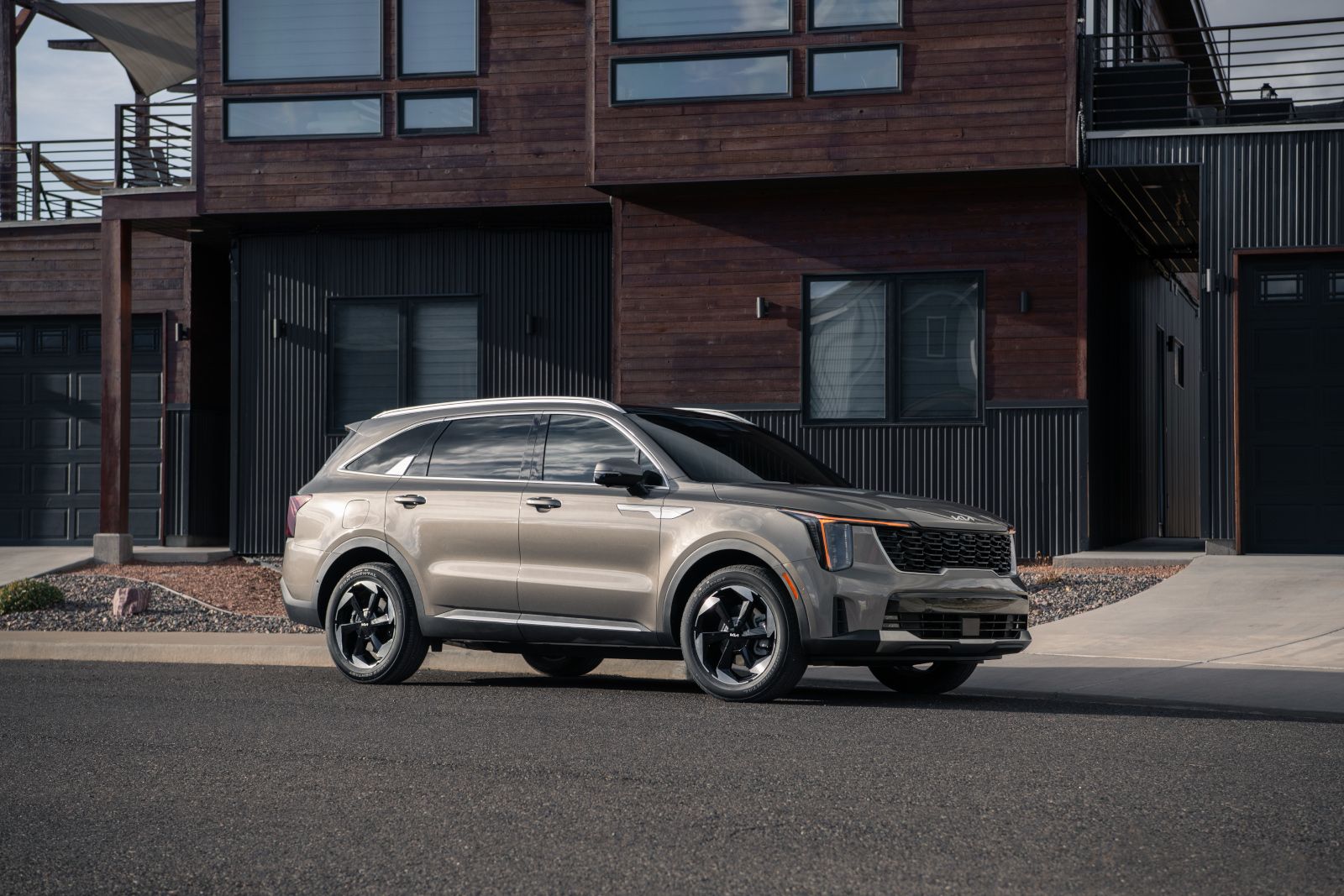
Thinking about towing a small trailer with a 2027 Kia Sorento PHEV? Before you hitch up for a trip along Ontario’s highways, it helps to know exactly what this plug-in hybrid supports and what you’re responsible for checking first.
This guide answers the real questions Ontario shoppers ask before their first tow day, from trim setup to trailer wiring to how a plug-in hybrid changes trip planning.
Is a 2,000 lb (907 kg) Tow Plan Realistic for the Sorento PHEV?
The Sorento PHEV’s standard towing capacity is 1,650 lbs (748 kg). When properly equipped, that rises to 2,000 lbs (907 kg), a gain of 350 lbs (159 kg). This applies specifically to the plug-in hybrid lineup, not the standard Sorento Hybrid, which carries its own towing figures.
So a 2,000 lb (907 kg) trailer plan is realistic, but only once the vehicle has the correct towing equipment installed and the load is confirmed against the Owner’s Manual. Never assume the higher figure applies without verifying your specific setup.
What Trim and Equipment Does the PHEV Need Before Towing?
The LX, EX, and SX PHEV AWD trims share the same drivetrain: a 1.6 L turbocharged four-cylinder paired with a 13.8 kWh battery, delivering 268 hp and 270 lb-ft of combined torque through a 6-speed automatic and AWD. Towing capacity is identical across these three trims.
What differs is factory-installed equipment. The EX PHEV AWD trim includes trailer package pre-wiring, which simplifies connecting trailer lighting and signals. Before assuming your Sorento PHEV is tow-ready, confirm the exact trim and whether it carries this pre-wiring, or whether a hitch and wiring harness still need to be added.
What Should I Check on the Hitch, Wiring, and Coupler?
A few physical checks matter every time, regardless of trim:
- Hitch class and receiver match the trailer’s tongue weight and coupler size
- Trailer wiring is connected and all lights (brake, turn signal, running) function correctly
- Coupler is fully latched and locked onto the ball
- Safety chains are crossed and secured with enough slack to turn
The Owner’s Manual outlines the exact weight ratings, hitch class requirements, and towing instructions for the PHEV. Do not exceed the standard 1,650 lb (748 kg) rating unless the proper towing equipment is confirmed and installed.
Does Cabin Loading Affect Towing Readiness?
Trailer weight is only part of the equation. Passengers, cargo, and gear inside the Sorento PHEV all count toward the vehicle’s gross vehicle weight rating, which sits at 2,650 kg for PHEV trims.
With 6-passenger seating and cargo volume ranging from 357 L behind the third row to 2,139 L behind the front seats, it’s easy to load the cabin heavily and forget that trailer tongue weight adds to the total. Pack cargo low and forward of the rear axle, and recheck total weight before departure rather than estimating.
What Vehicle Checks Matter Before a Tow Day?
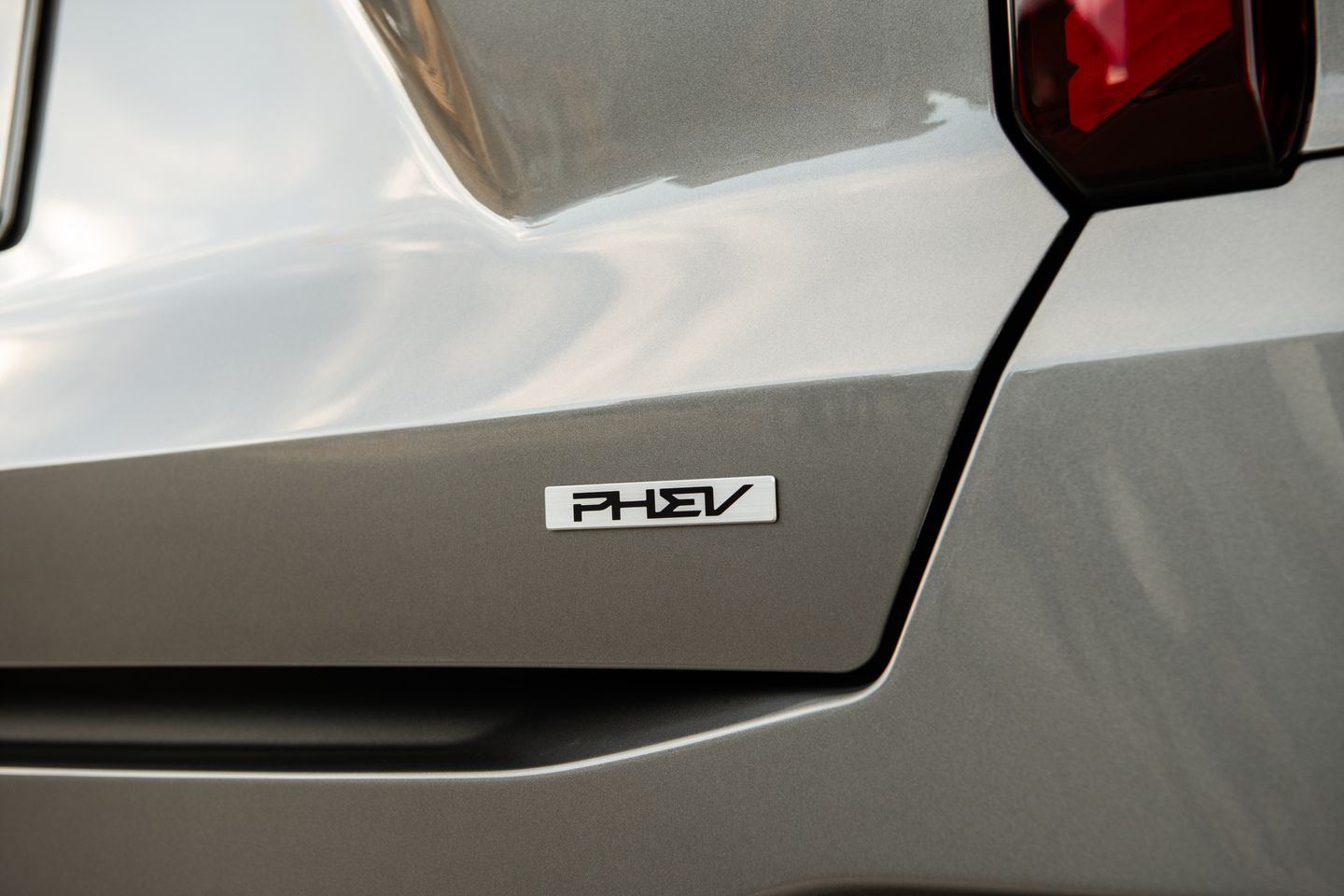
Tires, brakes, and warning lights deserve a look before any trailer trip. The Sorento PHEV rides on 235/55R19 tires, and correct pressures matter more under load. Confirm the Tire Pressure Monitoring System shows no warnings, and address any dashboard alerts before hitching up.
Brake performance changes with a loaded trailer, so a working Electronic Stability Control system and properly functioning brakes are non-negotiable. If a warning light appears, resolve it before towing rather than during the trip.
How Should I Plan Charging and Fuel for a Tow Day?
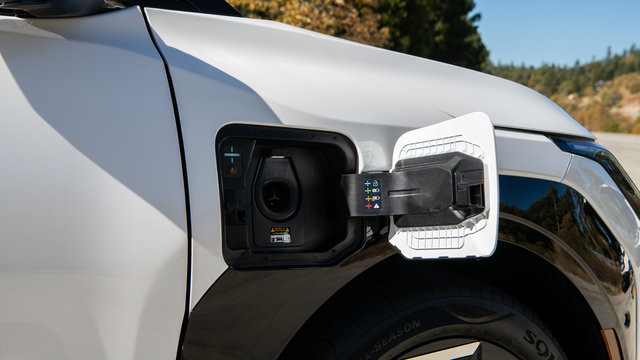
The Sorento PHEV pairs a 47 L fuel tank with a 13.8 kWh battery good for 55 km of electric range, and a 240V charge takes about 3.8 hours. Towing draws more energy than unloaded driving, so electric range will be shorter than the rated figure once a trailer is attached.
For a tow day, plan around gasoline as the primary range source and treat the electric range as a bonus for the start of the trip. Combined fuel economy is rated at 6.9 L/100 km without a trailer; expect that number to rise while towing.
How Should I Adjust My Driving With a Trailer?
A trailer changes how the Sorento PHEV accelerates, brakes, and handles lane changes. Give more distance for launching from a stop, brake earlier, and increase following distance on Ontario highways where traffic bunches near on-ramps and construction zones.
Hills and higher-speed sections call for extra caution, since trailer weight affects both acceleration and stopping distance. If conditions include high winds, heavy traffic, or an unfamiliar route with steep grades, consider reducing speed or delaying the trip.
Quick-Answer Summary
- Standard towing: 1,650 lbs (748 kg) | Max when properly equipped: 2,000 lbs (907 kg)
- Powertrain: 1.6 L turbo four-cylinder + 13.8 kWh battery, 268 hp, 270 lb-ft, 55 km electric range
- Cabin capacity: 6-passenger seating, GVWR of 2,650 kg for PHEV trims
- Before towing: verify trim, hitch class, wiring, coupler, tire pressures, and dashboard warnings
Your Next Step Before Hitching Up
Owner’s Manual towing instructions and weight ratings are the final word on what your specific Sorento PHEV can safely pull. A quick review with the dealer before your first trip confirms your trim’s exact equipment, whether pre-wiring is present, and whether any hitch installation is still needed.
That conversation also covers loading strategy for your particular mix of passengers and cargo, so the numbers on paper match what actually happens on the road.
Getting Your Sorento PHEV Ready for the Road
The 2027 Sorento PHEV offers a clear towing framework: a 1,650 lb (748 kg) standard rating that grows to 2,000 lbs (907 kg) with the right equipment, backed by a plug-in hybrid powertrain built for mixed city and highway driving.
Visit Bessada Kia in Pickering to confirm your Sorento PHEV trim’s exact towing setup, review the Owner’s Manual guidance with our team, and get your questions answered before your first tow day.
To learn more about the 2026 Kia Sorento PHEV, visit Kia.ca