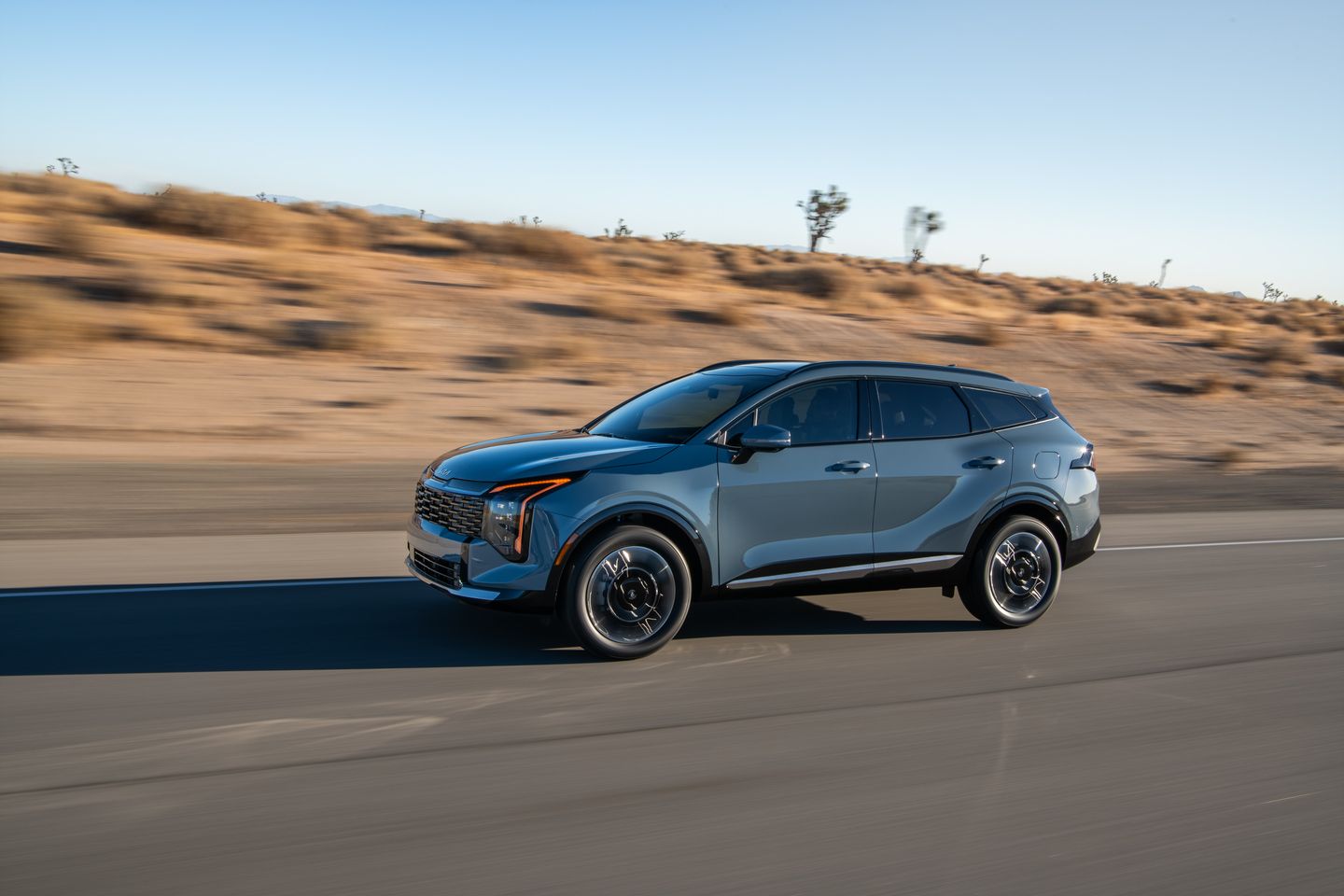
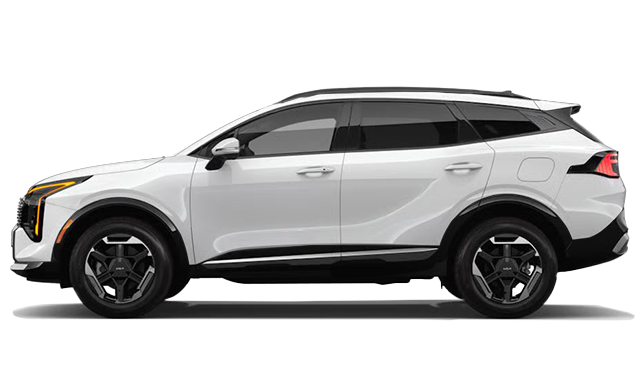
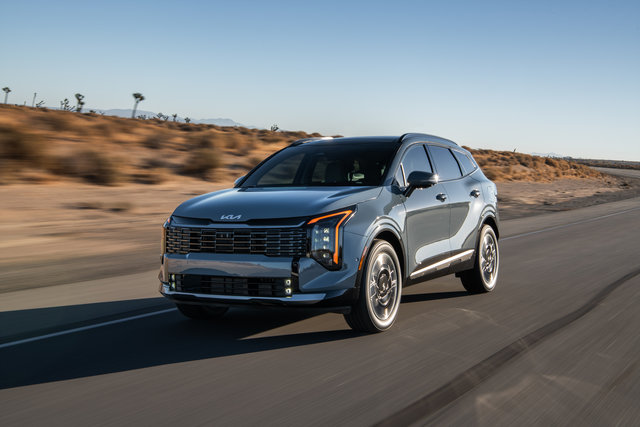
The 2027 Kia Sportage HEV offers a straightforward routine built around how you drive every day. Ontario drivers juggle short city hops, highway stretches to cottage country, and driveways that may or may not sit near an outlet. The right Sportage powertrain depends less on the spec sheet and more on your daily routine.
Sportage HEV vs PHEV: The Shared Numbers and the Real Differences
The two powertrains share the same body, the same all-wheel-drive system, and the same cargo hold. Where they part ways is charging, weight, and wheel size.
|
Spec
|
Sportage HEV
|
Sportage PHEV
|
|
Engine
|
1.6L turbocharged I4
|
1.6L turbocharged I4
|
|
Electric motor
|
17.4 hp
|
17.4 hp
|
|
Charging
|
Self-charging, no plug required
|
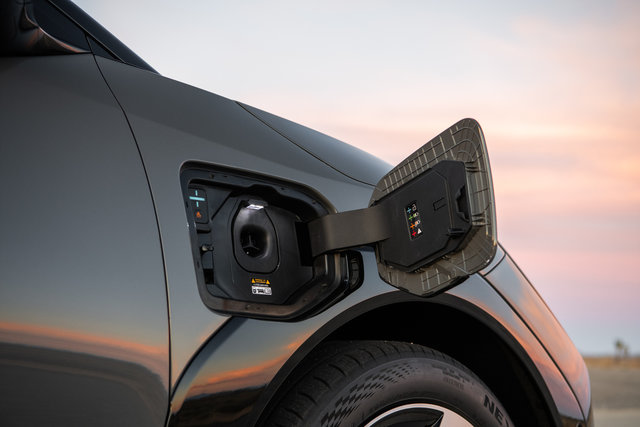
Plug-in via Level 1/2; Level 3 fast charging not supported
|
|
Rated all-electric range
|
Not officially rated
|
53 km
|
|
Curb weight
|
1,725 kg (3,803 lb) to 1,812 kg (3,994 lb)
|
1,912 kg (4,215 lb) to 1,954 kg (4,307 lb)
|
|
Drivetrain
|
AWD
|
AWD
|
|
Towing capacity
|
1,653 lbs (750 kg)
|
1,653 lbs (750 kg)
|
|
Cargo volume
|
977 L
|
977 L
|
|
Ground clearance
|
210 mm
|
210 mm
|
|
Wheel size
|
17-inch (EX), 18-inch (EX Premium, SX)
|
19-inch (EX, EX Premium, SX)
|
Charging and Electric Range: The Core Difference
The Sportage HEV never needs a plug. Its small lithium-ion battery recharges through the engine and regenerative braking, topping up on its own as you drive. There is no cord, no outlet, and no charging routine to manage beyond filling the tank with regular unleaded.
A plug-in version of the Sportage exists elsewhere in the lineup, but its setup depends on regular access to a Level 1 or Level 2 charger to make the most of its electric-only driving. The Sportage HEV skips that dependency entirely, relying on the engine and regenerative braking to keep the battery topped up without any charging routine.
Real-world range shifts with the season. Cold Ontario mornings and summer air conditioning both draw down the PHEV’s usable range, and highway speeds burn through the battery faster than stop-and-go city driving. A commute that fits comfortably inside 53 km on a mild day may need a bit more gasoline assistance when conditions turn.
Weight, Wheels, and Everyday Capability
The PHEV’s plug-in hardware adds weight. Curb weight runs from 1,912 kg (4,215 lb) to 1,954 kg (4,307 lb), compared with 1,725 kg (3,803 lb) to 1,812 kg (3,994 lb) for the HEV. Despite that difference, towing capacity holds steady at 1,653 lbs (750 kg) for both, and cargo volume matches at 977 L behind the rear seats.
Wheel size is one spot the two powertrains diverge by trim. The HEV rides on 17-inch wheels on the EX and steps up to 18-inch wheels on EX Premium and SX. The PHEV comes standard with 19-inch wheels across its entire trim range, which tends to sharpen handling response at some cost to ride cushioning over rough pavement.
Ground clearance sits at 210 mm and both use all-wheel drive, so neither powertrain gives up capability for gravel driveways or early-season snow. This decision is not about what the Sportage can haul or clear; it is about how you keep the battery topped up.
Interior and Technology: Consistent Either Way
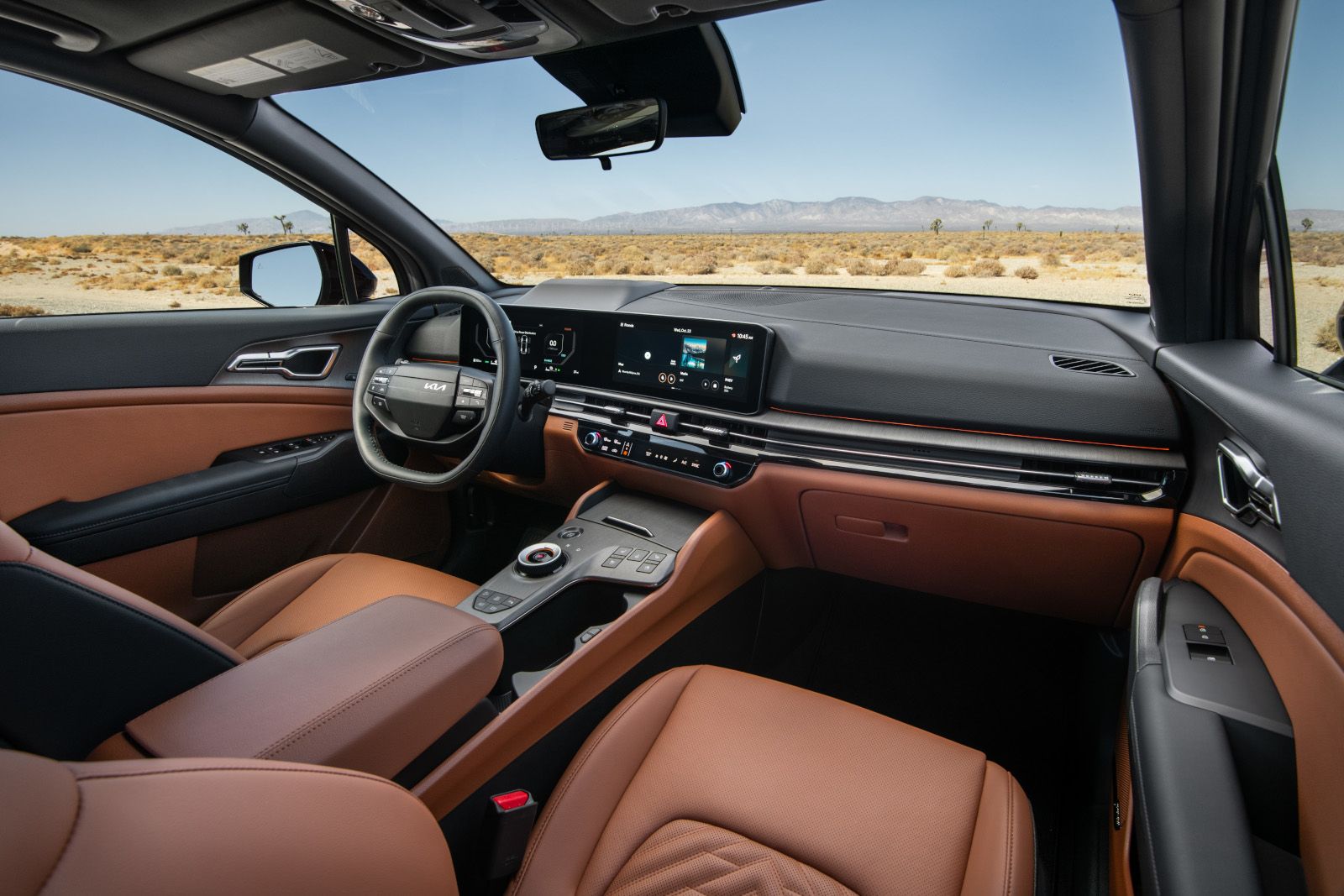
Step inside either powertrain and the experience lines up closely. Both come with a 12.3-inch touchscreen, a 4-inch instrument cluster, six-speaker audio, two USB ports, and synthetic leather upholstery on the EX AWD trim. None of that changes based on which engine bay you choose.
The Sportage HEV delivers that same technology and interior space without asking you to change your routine to get it.
Which Sportage Powertrain Fits Your Routine?
The Sportage HEV suits drivers without a reliable charging setup, whether that is a condo without a dedicated outlet or a driveway too far from the electrical panel. It also fits anyone who regularly covers long distances between fill-ups, since there is no charging stop to plan around and no change in routine for road trips.
The Sportage HEV remains the simpler fit for most routines. There is no plug to manage and no charging schedule to plan around, so your driving pattern stays the same no matter the season or the trip length.
Drivers who split time between city errands and highway runs to cottage country still come out ahead with the HEV. It never asks you to think about charging on a long weekend drive, and it keeps every trip, short or long, just as simple as filling the tank.
Finding the Right Sportage at Bessada Kia
The 2027 Kia Sportage HEV and PHEV share the same cabin, cargo room, and all-wheel-drive setup, splitting only on how their batteries get topped up and how far each can travel on electricity. For drivers who want a straightforward routine with no charging setup to worry about, whether covering long distances or navigating daily errands, the HEV is the clear fit.
Visit Bessada Kia in Pickering to explore the 2027 Sportage lineup and find the powertrain that matches your charging setup and commute. Our team can walk you through features and trims for the Sportage that fits your routine.
To learn more about the 2027 Kia Sportage HEV, visit Kia.ca