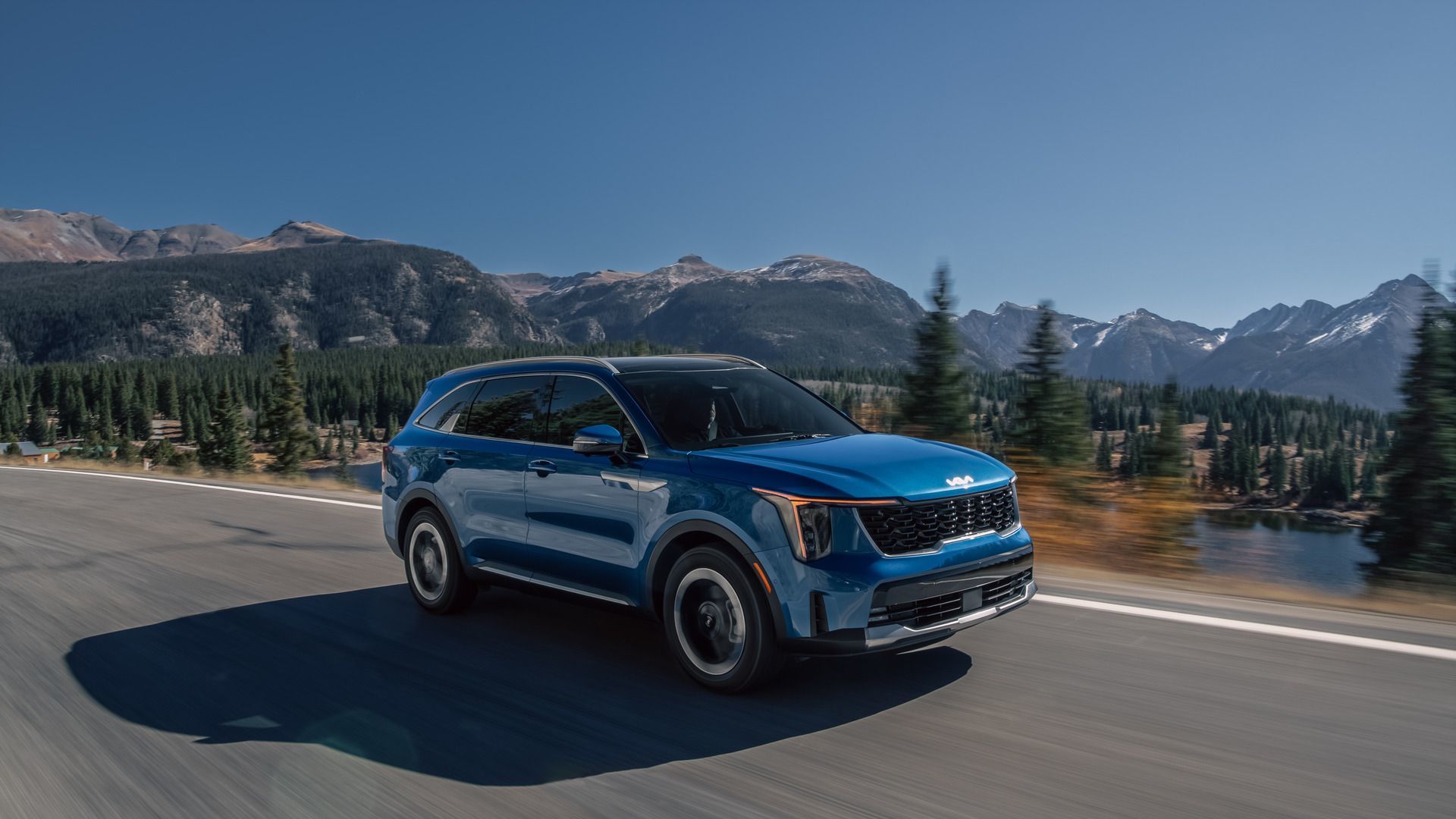
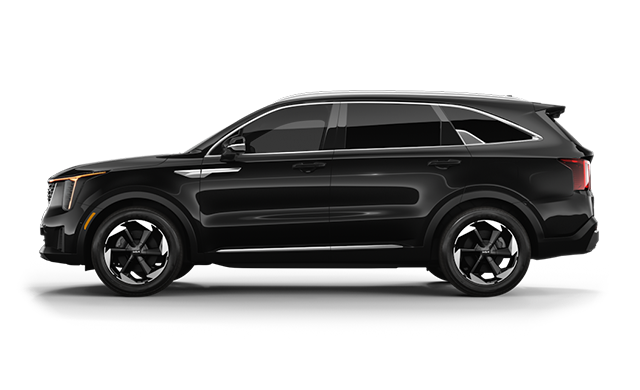
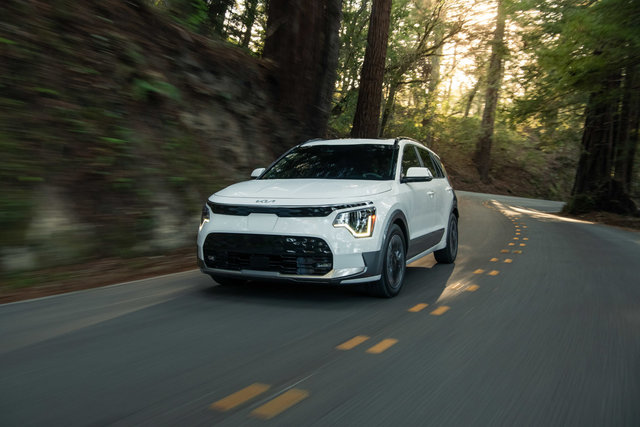
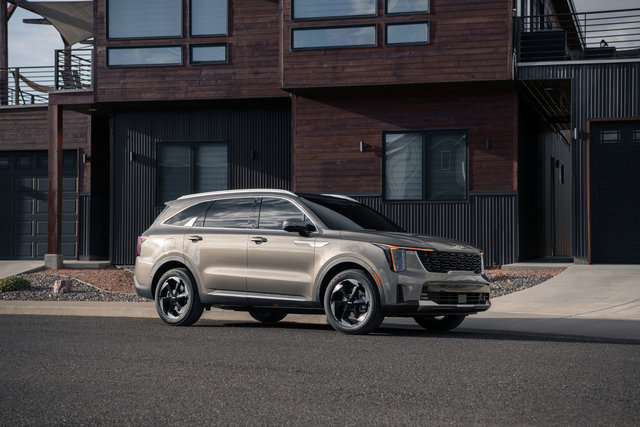
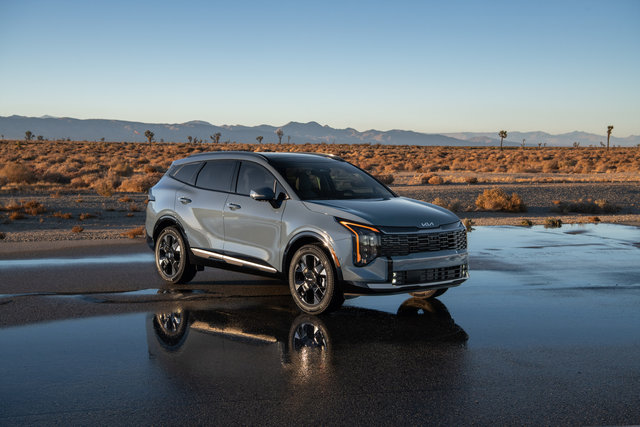
The 2026 Kia Sorento HEV and Sportage HEV share the same 1.6L turbocharged hybrid powertrain and identical 2,000 lb towing capacity - but one offers six seats while the other delivers tighter fuel economy in a more compact footprint. For Ontario families weighing daily practicality against occasional space needs, the choice hinges on how often you actually fill those extra seats.
Both hybrids deliver meaningful fuel savings over their gasoline counterparts. The question is whether the Sorento's third row and expandable cargo justify the modest efficiency trade-off for your household's real-world usage patterns.
|
Feature
|
2026 Sorento HEV
|
2026 Sportage HEV
|
|
Powertrain
|
1.6L Turbo HEV
|
1.6L Turbo HEV
|
|
Horsepower
|
227 hp
|
232 hp
|
|
Torque
|
258 lb-ft
|
271 lb-ft
|
|
Fuel Economy (Combined)
|
7.0 L/100km
|
6.7 L/100km
|
|
Max Cargo Volume
|
2,139 L
|
2,087 L
|
|
Seating Capacity
|
6-passenger
|
5-passenger
|
|
Towing Capacity
|
1,653-2,000 lb
|
2,000 lb
|
|
Drivetrain
|
AWD
|
AWD
|
The Space Equation: Third Row vs Compact Footprint
The Sorento HEV offers 2,139 litres of maximum cargo volume (behind the first row, floor lowered) compared to the Sportage's 2,087 litres - a difference of just 52 litres. Where the vehicles truly diverge is in how that space is configured.
The Sorento's third row adds genuine flexibility for carpools, multi-generational trips, or growing families. Six-passenger capacity means an extra friend joins the cottage weekend without rearranging plans. Behind the second row, the Sorento provides 1,090-1,274 litres depending on floor position. With the third row in use, 357 litres remains for groceries or weekend bags.
The Sportage's 977-1,119 litres behind the second row handles grocery runs and daily errands efficiently. For couples or small families who rarely need maximum capacity, the compact dimensions make parking in downtown Toronto or navigating tight suburban driveways more manageable.
Hybrid Powertrain: Shared DNA, Different Applications
Both vehicles use Kia's 1.6L turbocharged hybrid system paired with a permanent magnet synchronous motor and six-speed automatic transmission. The Sportage HEV generates 232 hp and 271 lb-ft of torque compared to the Sorento's 227 hp and 258 lb-ft - a modest advantage that matters less than how each vehicle applies that power.
The Sportage's lighter weight translates to slightly sharper acceleration in city traffic. The Sorento's additional mass provides more planted highway stability when loaded with passengers and cargo.
Both hybrids route power through standard AWD systems, delivering confident traction on winter roads without the range anxiety of plug-in variants.
Fuel Economy: The 7.0 L/100km vs 6.7 L/100km Comparison
The Sportage HEV achieves 6.7 L/100km combined versus the Sorento's 7.0 L/100km. Over 20,000 kilometres annually - typical for Ontario families - that difference amounts to roughly 60 litres.
The Sportage's efficiency advantage grows on highway-heavy driving patterns. The Sorento's 6.7 L/100km highway rating nearly matches the Sportage's 6.6 L/100km, narrowing the gap where families actually cover distance.
For buyers prioritizing absolute efficiency, the Sportage delivers measurable savings. For families who need the Sorento's space, the fuel economy penalty is modest enough to justify the cargo and seating flexibility.
Technology and Safety: Shared Standards Across Trims
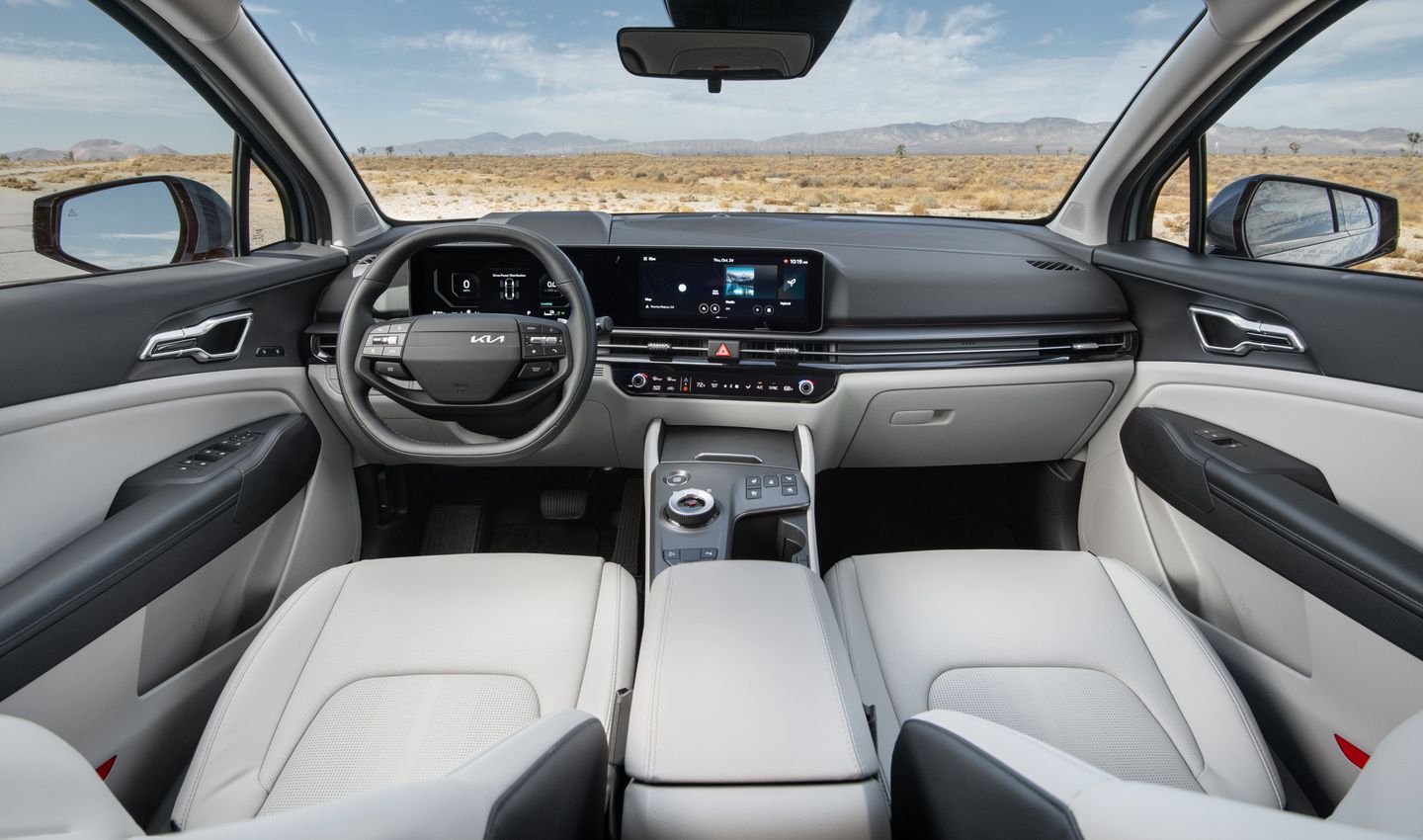
Both hybrids offer Kia's 12.3-inch multimedia interface with wireless Apple CarPlay and Android Auto. The Sorento SX adds Bose premium audio and a 12.3-inch supervision instrument cluster, while the Sportage SX counters with Harman Kardon premium audio and available heads-up display.
Safety equipment follows similar patterns:
Sorento HEV Standard Safety:
- 9 airbags (including third-row coverage)
- Forward collision avoidance (FCA 1.5)
- Blind spot collision avoidance
- Lane keeping and following assist
- Rear occupant alert
- Highway drive assist 2 (HDA 2) on SX trim
Sportage HEV Standard Safety:
- 8 airbags
- Forward collision avoidance (FCA 1.5)
- Highway drive assist 1 (HDA)
- Lane following assist 2
- Remote smart parking assist (RSPA)
- Highway drive assist 2 (HDA 2) on SX trim
The Sorento's rear occupant alert prevents accidentally leaving children or pets in the third row - a feature absent on the five-seat Sportage. Both vehicles offer surround view monitors and blind view monitors for parking confidence.
Towing: Equal Capability, Different Contexts
Both hybrids handle up to 2,000 lb when properly equipped - sufficient for small utility trailers, jet skis, or pop-up campers. The Sorento's additional cargo space behind the third row means you tow the trailer while still carrying six passengers and their gear.
The Sportage's compact dimensions make it easier to manoeuvre boat launches or tight campground roads. For buyers who tow occasionally but prioritize daily drivability, the smaller footprint reduces stress.
Neither hybrid sacrifices towing capability for efficiency. The shared 2,000 lb rating puts both vehicles in the recreational towing category without requiring diesel torque or V6 fuel consumption.
Trim Progression: Where Each Model Adds Value
The Sorento HEV lineup spans LX, EX, and SX trims. The LX starts with 19-inch alloy wheels, LED headlights, and heated power mirrors. The EX adds laminated front door glass for reduced road noise, wireless phone charging, and a smart power liftgate. The SX brings genuine leather seats, air-cooled front seats, heated second-row seats, and the Bose premium audio system.
The Sportage HEV offers EX, EX Premium, and SX trims. The EX includes projection LED headlights, heated windshield, and rain-sensing wipers. The EX Premium adds an 18-inch wheel upgrade and panoramic sunroof. The SX delivers four-cube projection LED headlights, matte chrome finish, and quilted synthetic leather seats.
Both lineups reward buyers who step up to higher trims with meaningful comfort and technology upgrades rather than cosmetic changes.
Which Kia Hybrid Is Right for You?
For families who regularly use all three rows - carpooling to hockey practice, hosting grandparents for weekend trips, or managing multiple children - the Sorento HEV's six-passenger capacity delivers functionality the Sportage cannot match. The third row isn't occasional-use seating. It's genuine capacity that changes how you plan family logistics.
For couples or small families who prioritize fuel economy and urban manoeuvrability over maximum space, the Sportage HEV's 6.7 L/100km combined rating and compact dimensions reduce daily driving costs and parking stress.
For buyers who tow recreationally but don't need third-row seating, the Sportage's 2,000 lb capacity matches the Sorento while delivering slightly better efficiency and easier trailer manoeuvring in tight spaces.
For growing families anticipating future needs - a third child, aging parents who join family trips, or frequent carpools - the Sorento's expandable seating prevents the need to upsize vehicles in two years. The modest fuel economy difference costs less than trading up later.
The Sorento and Sportage Share Hybrid Efficiency
The Sorento HEV and Sportage HEV share hybrid efficiency, AWD capability, and Ontario-winter readiness. The decision comes down to your family's actual space usage patterns.
Count how many times in the past year you needed more than five seats or wished for extra cargo space. If that number exceeds monthly trips, the Sorento's third row and flexible cargo volume justify the modest efficiency trade-off. If those occasions happen quarterly or less, the Sportage's tighter fuel economy and easier daily driving suit your lifestyle better.
Visit Bessada Kia in Mississauga to explore both hybrids and measure your family's gear against each vehicle's cargo area. The right choice becomes clear when you match your actual usage patterns against what each Kia delivers.
To learn more about the 2026 Kia Sorento HEV, visit Kia.ca